July 29, 202610 min read
A Private Meeting Recorder That Runs Entirely in a Browser Tab
We built recording, Whisper transcription and AI summaries with no server. Two problems nearly sank it: GPU memory and the cross-origin model cache.
Read more
17 articles
We built recording, Whisper transcription and AI summaries with no server. Two problems nearly sank it: GPU memory and the cross-origin model cache.
Read moreA full meeting was recorded. Stop was pressed. Nothing appeared. Here is what was wrong, and the durability rules we now apply to anything capturing input.
Read morePressing space should pan the canvas — unless there is a text cursor, when it should type a space. Harder than it looks, and everyone gets it wrong.
Read more
How to create a digital vision board combining images, text, goals and affirmations on a spatial canvas. More flexible than a physical board.
Read more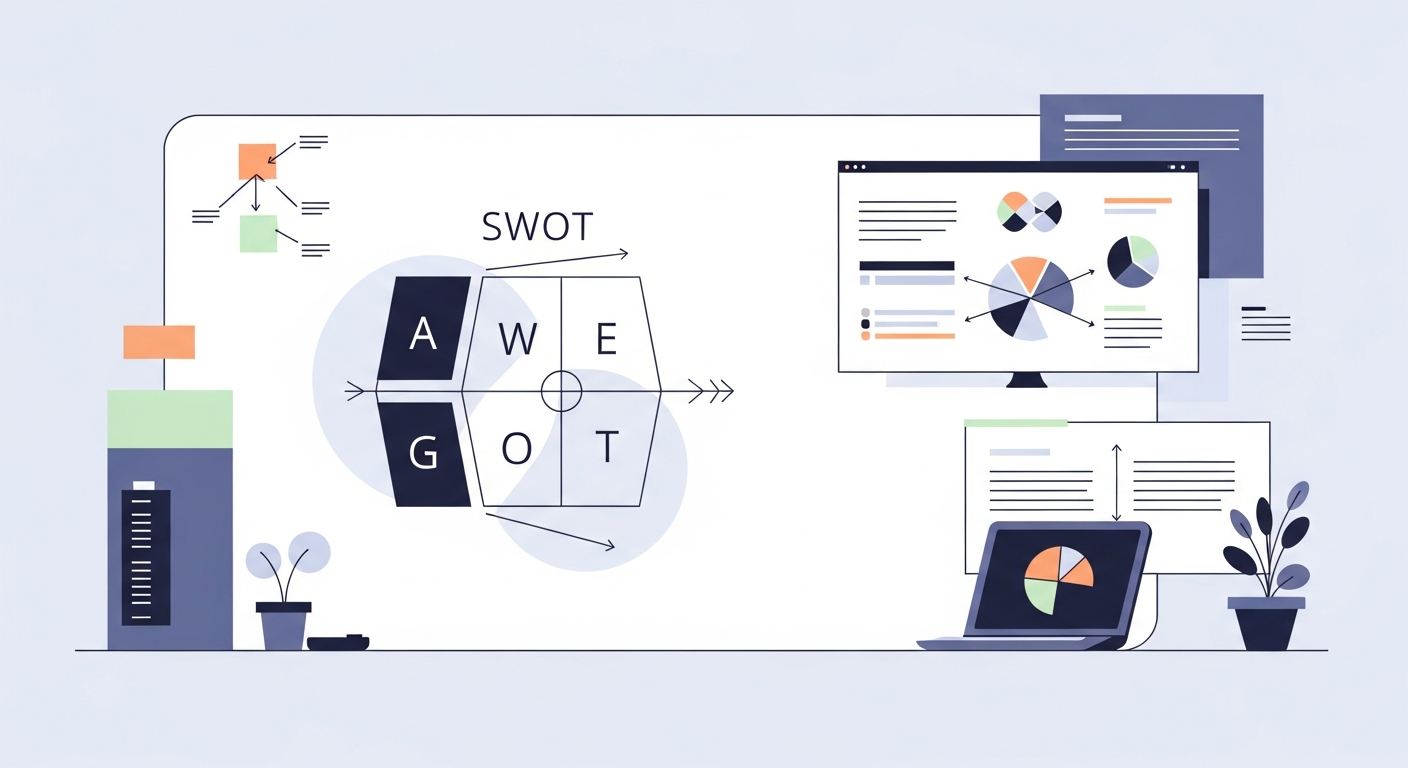
How to run a SWOT analysis (Strengths, Weaknesses, Opportunities, Threats) on a spatial canvas, with tips for adding depth beyond the basic quadrant.
Read more
How to create a visual Eisenhower matrix (urgent/important grid) on an infinite canvas for task prioritization. Includes setup and daily workflow.
Read more
How to run the double diamond process — discover, define, develop, deliver — on an infinite canvas, with spatial layouts for each phase.
Read moreA sync limit that only trips for real users, an iOS login that strands you on a blank page, and a mic permission with no setting to grant it. Five bugs.
Read more
A complete system for literature reviews in spatial notes: capturing summaries, coding themes, mapping arguments, spotting gaps, synthesizing findings.
Read more
How to run Feynman's four-step learning technique on a spatial canvas: choose a concept, teach it simply, find the gaps, simplify further.
Read moreWeb pages rot, mutate and vanish. OmniCanvas captures a full-page screenshot of any URL — plus its searchable text — onto your canvas in one click.
Read more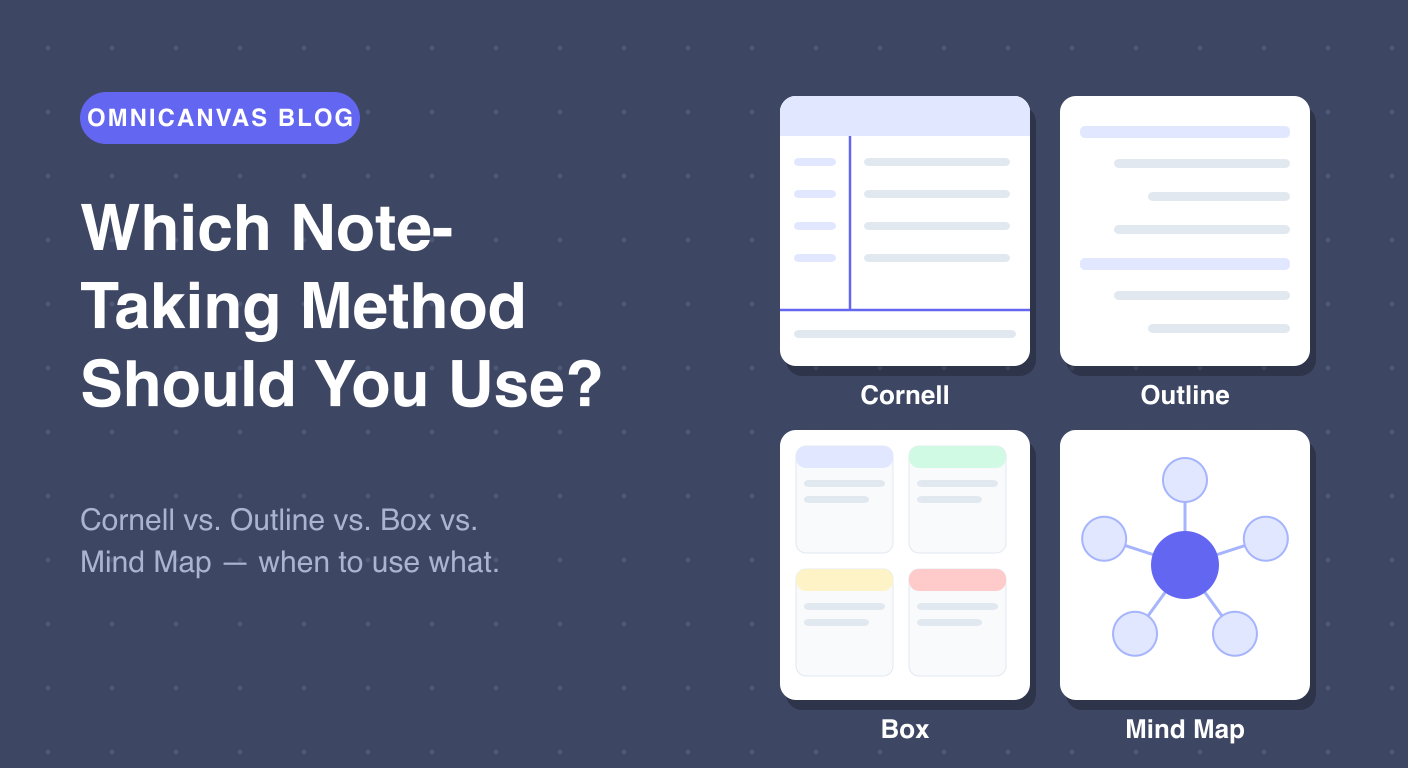
A practical guide to choosing between the Cornell method, outline method, box method and mind mapping — plus the capture-then-process workflow.
Read more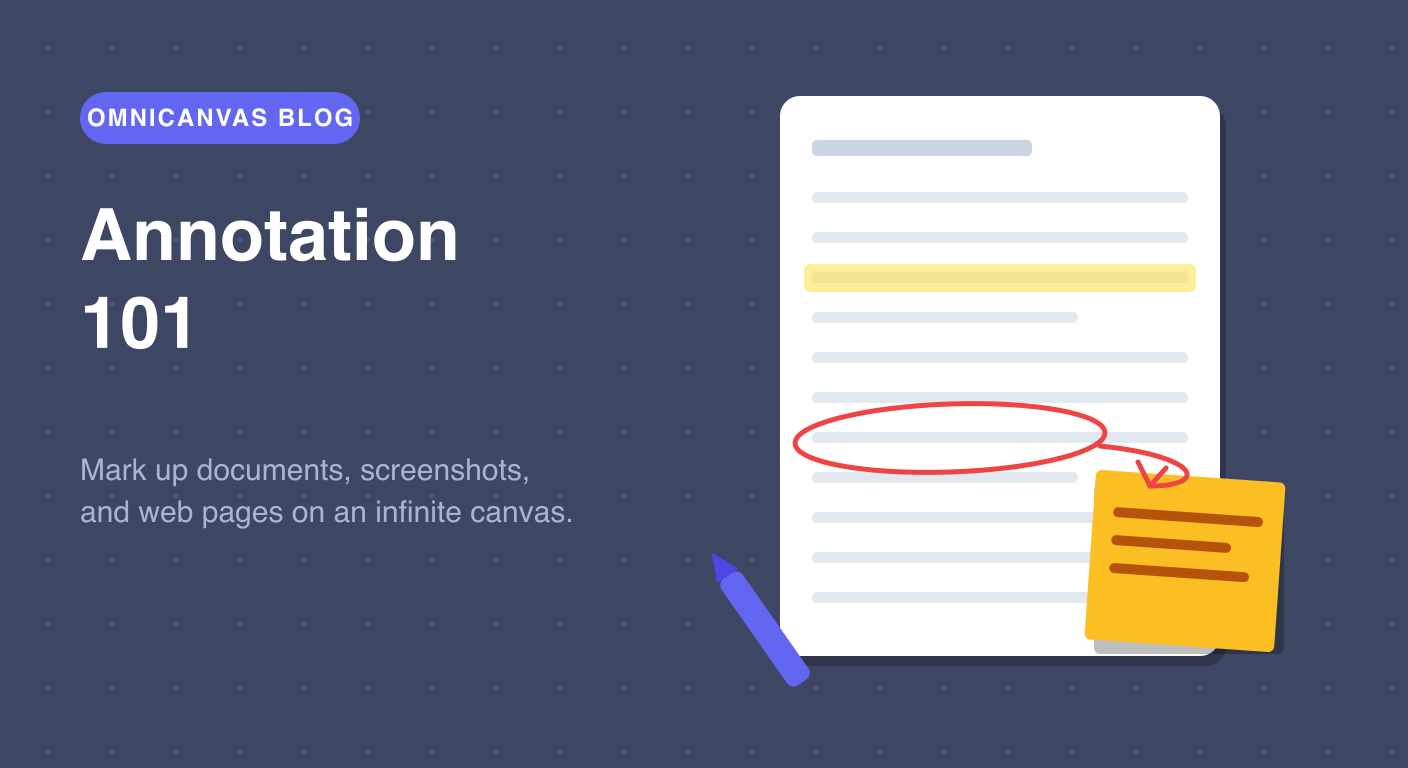
A practical guide to annotation: why it beats passive reading, and how to annotate screenshots, web clips, photos and handwritten notes on a canvas.
Read more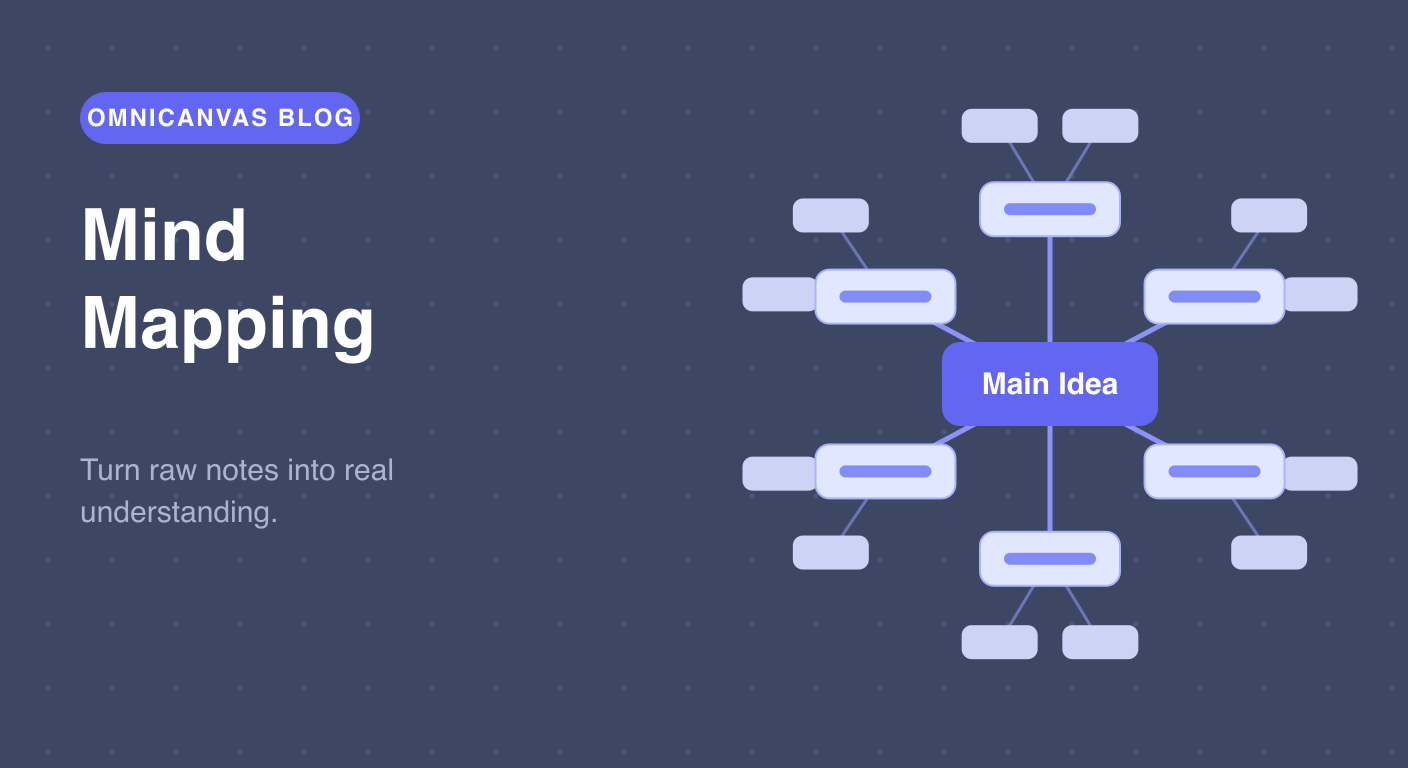
Mind maps are the best tool for making sense of material after a meeting or class. How to build one, why it works, and how to start from a template.
Read more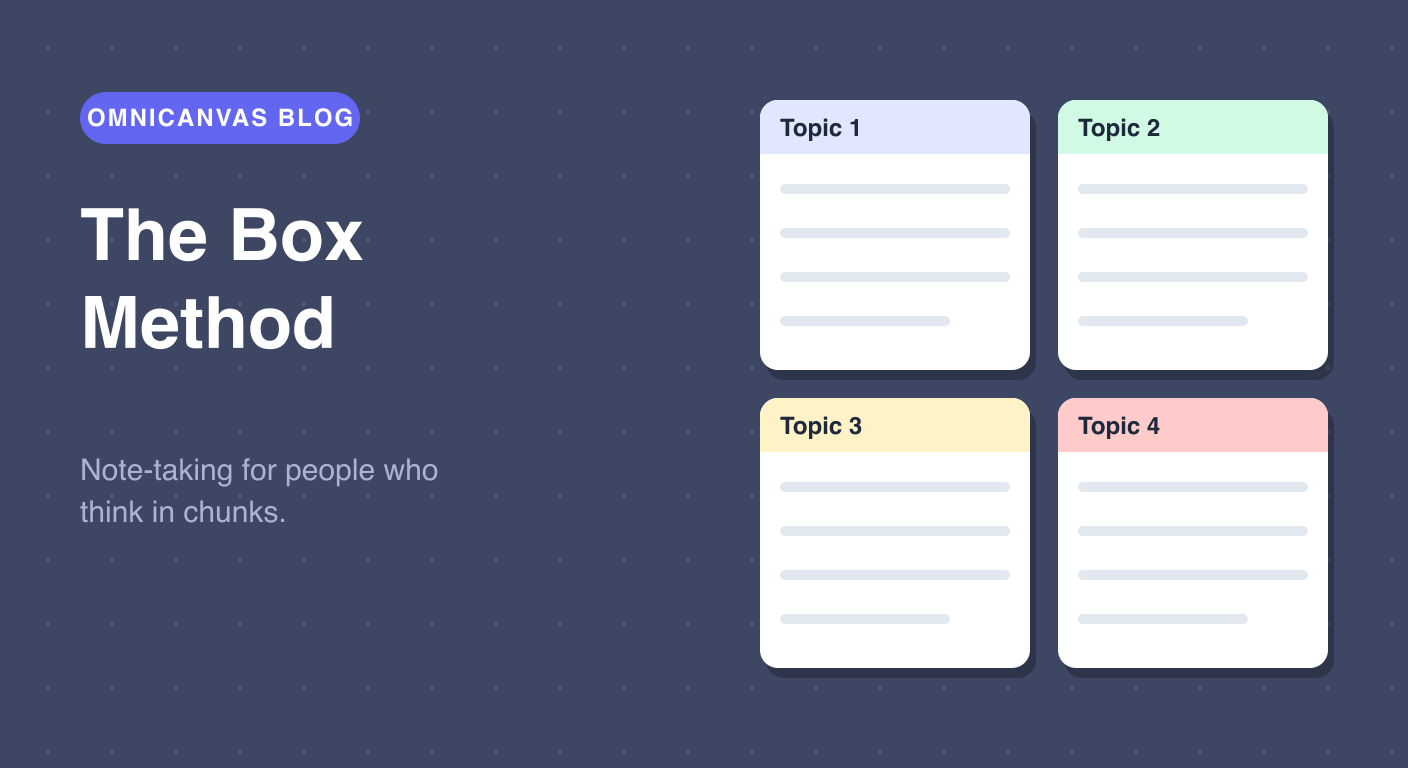
The box method groups notes into visual containers, one box per topic. Why spatial chunking improves recall, and when boxing beats outlining.
Read more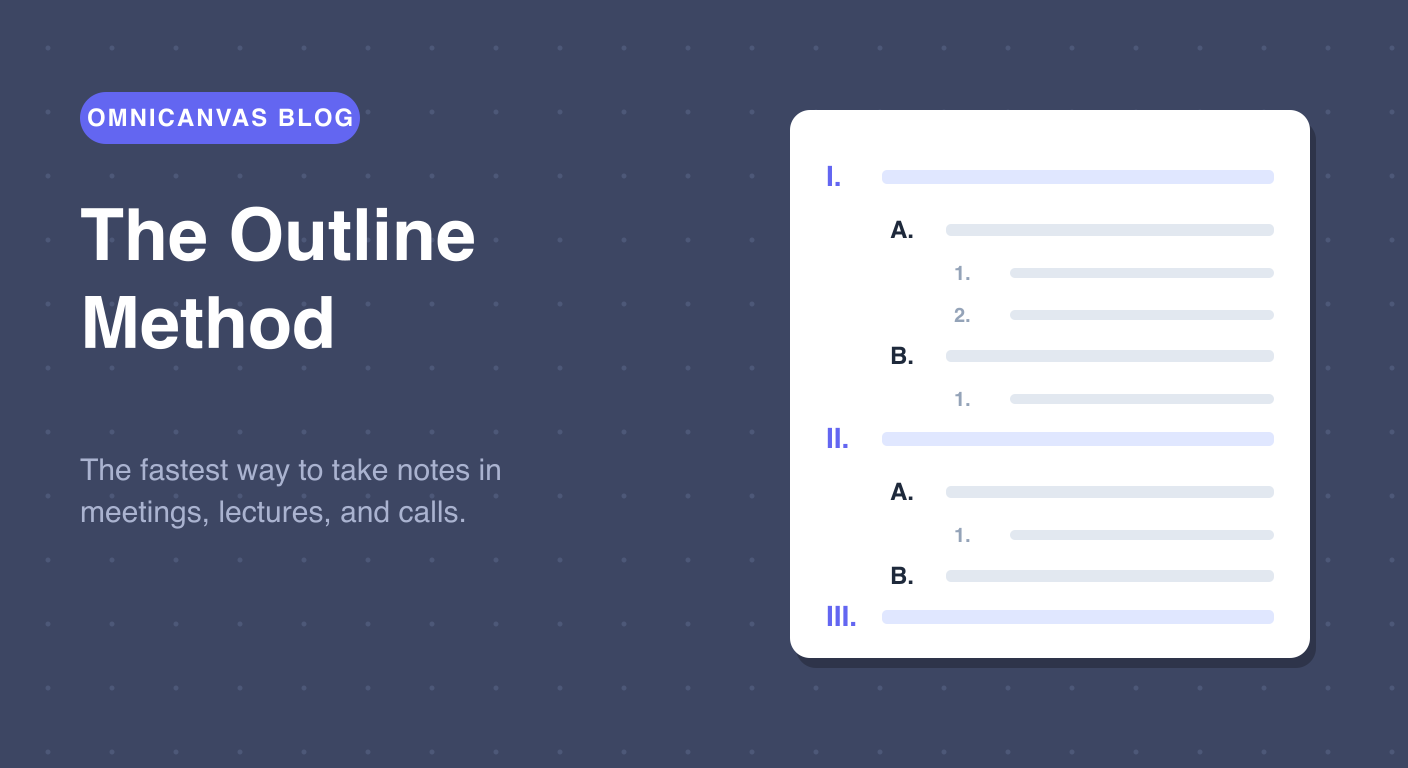
The outline method is the best technique for live capture — meetings, lectures and calls. How it works, when to use it, and how to start from a template.
Read more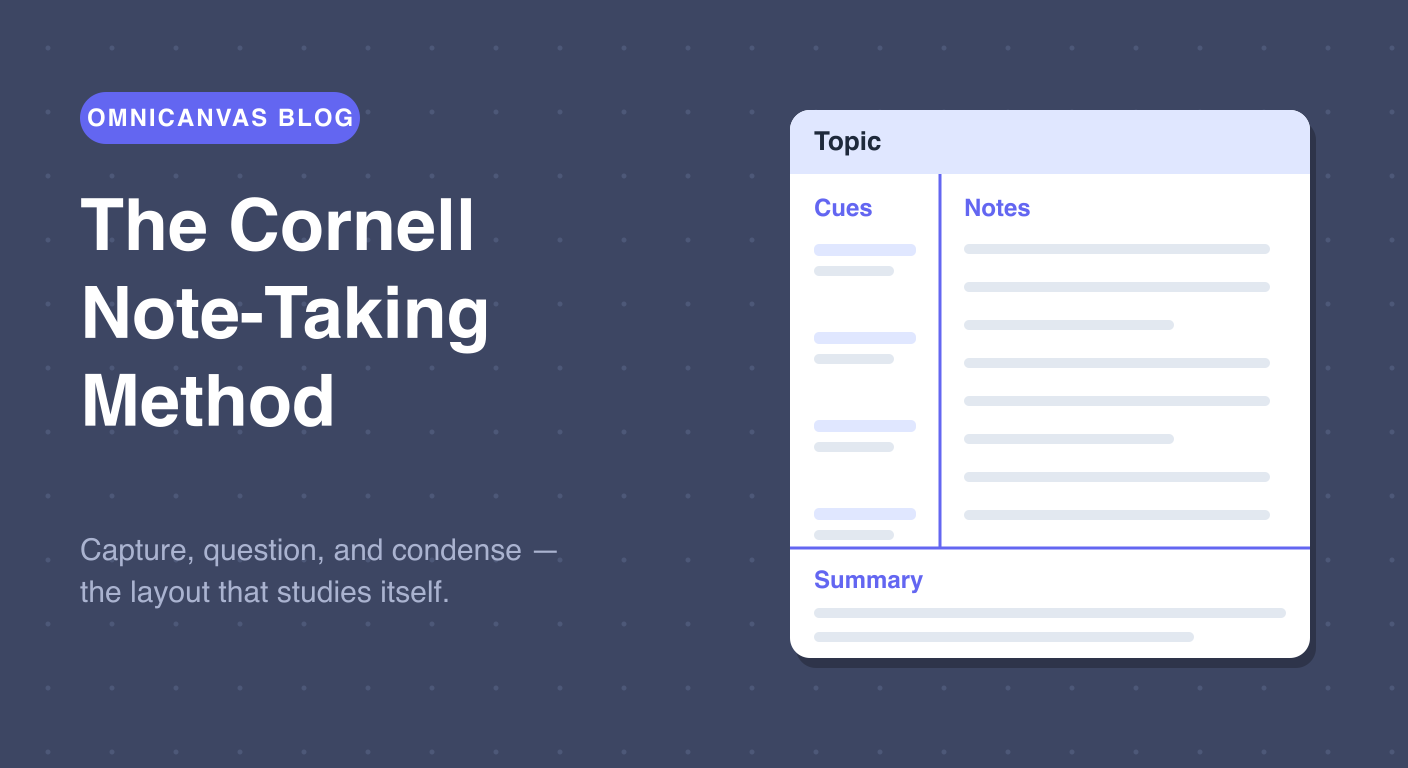
How the Cornell method works, why its cue column and summary row beat ordinary notes for retention, and how to use the built-in Cornell template.
Read more